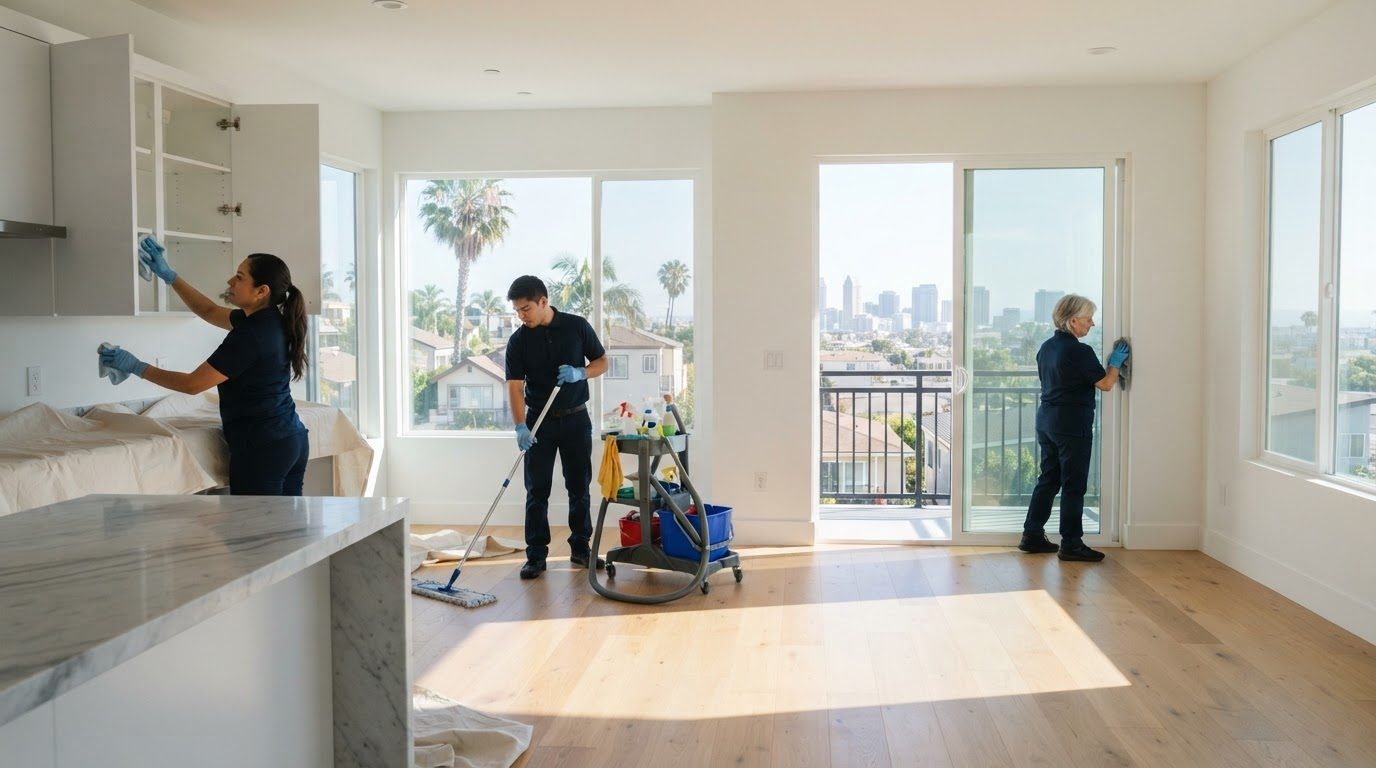
Moving into a new home is exciting until dust, residue, and someone else’s buildup appear under the first unpacked box. Scheduling a move-in cleaning before furniture arrives creates a rare opportunity: every reachable surface can be cleaned without working around belongings.
A professional Move In cleaning typically prepares an empty apartment, condo, rental, or house for occupancy. Rather than maintaining an already tidy space, the service focuses on accumulated grime, overlooked edges, appliance surfaces, and high-touch areas left behind by prior occupants or construction work.
The timing matters as much as the checklist. Clearwater Cleaning describes move-related cleaning as a more thorough service than routine housekeeping, with estimates shaped by the property’s size and condition. Planning access, priorities, and add-ons in advance helps ensure the cleaning supports your move rather than competing with it.
Why Clean Before You Unpack
An empty property is easier to clean systematically. Technicians can reach baseboards, cabinet interiors, floor edges, closets, and areas that will soon be blocked by beds, sofas, and shelving. Once furniture arrives, cleaning becomes slower and often less complete.
A move-in service can address:
- Fine dust and construction residue from recent work.
- Pet hair and dander left by previous occupants.
- Cooking grease, soap scum, hard-water deposits, and tracked-in soil.
- Odors associated with pets, smoking, damp materials, or closed rooms.
- Dirt on switches, handles, ledges, vents, and other high-touch surfaces.
This is not a substitute for professional remediation. Mold contamination, pest infestations, sewage exposure, lead dust, or extensive smoke damage may require specialized contractors and documented protocols. In California, cleaning professionals should also work safely around chemical products, ventilation limitations, and building access rules.
Move-in cleaning differs from recurring housekeeping because it resets the property rather than maintaining it. It overlaps with deep cleaning, but the scope is specifically tied to occupancy and often includes empty-home details such as cabinet interiors, appliance interiors, and areas that would otherwise become inaccessible.
What a Thorough Move-In Clean Covers
The precise scope should be confirmed in the quote. A practical room-by-room workflow generally includes the following.
Kitchen
The kitchen usually receives close inspection because grease and residue accumulate in concealed places. Depending on the agreed service, cleaners may:
- Wipe appliance exteriors and clean appliance interiors such as ovens or refrigerators.
- Clean cabinet fronts, drawers, shelves, handles, and interior surfaces.
- Wash countertops, backsplash, sink basins, faucets, and surrounding seams.
- Remove crumbs and buildup from floor edges, corners, and toe-kicks.
Interior appliances may be an add-on, especially when heavy grease, burnt-on carbon, or spoiled food is present. Stainless steel also requires nonabrasive products to avoid scratches and visible streaks.
Bathrooms
Bathrooms require both soil removal and sanitation. Typical tasks include:
- Scrubbing and sanitizing toilets, showers, tubs, sinks, counters, and floors.
- Removing soap scum, mineral scale, and hard-water residue where the surface allows.
- Cleaning mirrors, faucets, grout lines, corners, drains, and overlooked ledges.
Hard-water deposits can be especially noticeable in Southern California. Severe scale may need descaling products and additional dwell time; porous grout, damaged caulk, and permanently etched glass may not return to new condition through cleaning alone.
Bedrooms and Living Areas
With rooms empty, technicians can clean surfaces that routine service often skips:
- Baseboards, doors, trim, accessible ledges, and closet shelving.
- Ceiling fans, blinds, light fixtures, vents, and cobweb-prone corners.
- Floors by vacuuming, sweeping, or mopping according to the material.
- Areas beneath and behind furniture locations before those spaces are covered.
Floor treatment depends on the substrate. Hardwood, luxury vinyl, tile, laminate, and carpet each require compatible moisture levels and products. Carpet extraction, wall washing, extensive blind cleaning, and exterior window cleaning may require separate confirmation.
High-Touch and Overlooked Details
A quality inspection should include switches, door handles, cabinet pulls, railings, thermostat controls, faucet handles, and appliance buttons. Cleaners may also check window ledges, vents, corner transitions, and the tops of doors.
Professional equipment and products should be supplied as part of the service, but customers should ask whether specialty tools, ladder work, delicate finishes, or exterior glass are included.
When to Schedule the Service Around Your Move
The best sequence is usually: previous occupants leave, movers clear the property, cleaners work, then furniture and boxes arrive. This maximizes access and reduces the chance that freshly cleaned floors or counters are immediately soiled.
Common scheduling options include:
- Before furniture arrives: The most thorough and efficient choice.
- Between closing or lease start and move-in day: Useful when keys are available early.
- Same-day coordination: Possible when timing is tight, but it leaves less margin for delays, access problems, or unexpected soil.
Before the appointment:
- Remove personal belongings, discarded packing materials, and moving debris.
- Confirm keys, codes, parking, elevator reservations, building rules, and entry instructions.
- Identify priority rooms and any inspection or landlord requirements.
- Point out appliances, walls, windows, flooring, or odors needing special attention.
For San Diego apartments and condos, loading zones, elevator windows, and homeowners association rules can affect the appointment. Larger family properties may require a longer visit or staged cleaning, while an empty one-bedroom unit may be completed more efficiently.
Who Benefits From Move-In Cleaning
Move-in cleaning is useful for first-time buyers and renters who want a sanitary blank slate, particularly when the home was occupied by pets, smokers, or multiple tenants. Families can also benefit when they need the kitchen, bathrooms, and high-touch surfaces ready before children arrive.
Landlords and property managers use the service to prepare vacancies, support inspection standards, and present units consistently to incoming residents. Owners managing homes from another city may value a documented scope and coordinated access more than a last-minute basic tidy.
A combined move-out and move-in booking can help customers vacate one property while preparing another. However, the service is distinct from:
- Post-remodel cleaning: Focused on dust, adhesive, paint specks, and construction debris.
- Recurring housekeeping: Designed for ongoing maintenance.
- Short-term-rental turnover: Built around rapid changeovers, linens, supplies, and guest-ready presentation.
Planning the Scope, Time, and Cost
There is no responsible universal price for move-in cleaning. Cost depends on square footage, bedroom count, property condition, accessibility, flooring, occupancy status, and requested extras. An empty one-bedroom apartment may require substantially less labor than a large furnished home with neglected interiors.
A quote or time estimate commonly considers:
- Whether the property is empty and utilities are available.
- The number of kitchens, bathrooms, closets, and levels.
- Soil severity, pet hair, grease, mineral buildup, and odors.
- Interior appliances, walls, windows, blinds, carpets, and specialty surfaces.
- Parking, elevator access, travel time, and building restrictions.
As a broad industry planning benchmark, standard move-related cleaning may range from roughly $150 to $500 for many apartments and moderate homes, while larger or heavily soiled properties can exceed $600. These are not fixed Clearwater Cleaning prices; a site-specific quote is more reliable than an advertised flat rate. Add-ons such as oven interiors, refrigerator interiors, carpet extraction, interior windows, and wall washing can materially change the total.
Move-In Cleaning Questions
What does a move-in clean include?
Usually kitchens, bathrooms, bedrooms, living areas, floors, dusting, high-touch surfaces, and accessible details. Confirm appliance interiors, windows, walls, and cabinets.
How is move-in cleaning different from a deep clean?
Deep cleaning is a general intensive reset. Move-in cleaning is timed and scoped for an empty property and may emphasize areas exposed before occupancy.
Should cleaning happen before or after movers arrive?
Before movers arrive whenever possible. If same-day service is necessary, cleaning after the old home is emptied is generally more effective.
How long does it take?
The property’s size, condition, access, and add-ons determine the estimate. A one-bedroom apartment and a four-bedroom home are different jobs.
Can it be scheduled on short notice?
Sometimes, depending on crew availability and access. Earlier booking provides more control around closing, lease, and moving dates.
Do cleaners bring supplies?
Confirm this during booking; Clearwater Cleaning states that equipment and products are included in its quotes.
Can both homes be covered?
Ask whether move-out and move-in services can be coordinated across separate addresses, and provide each property’s access details and required completion time.