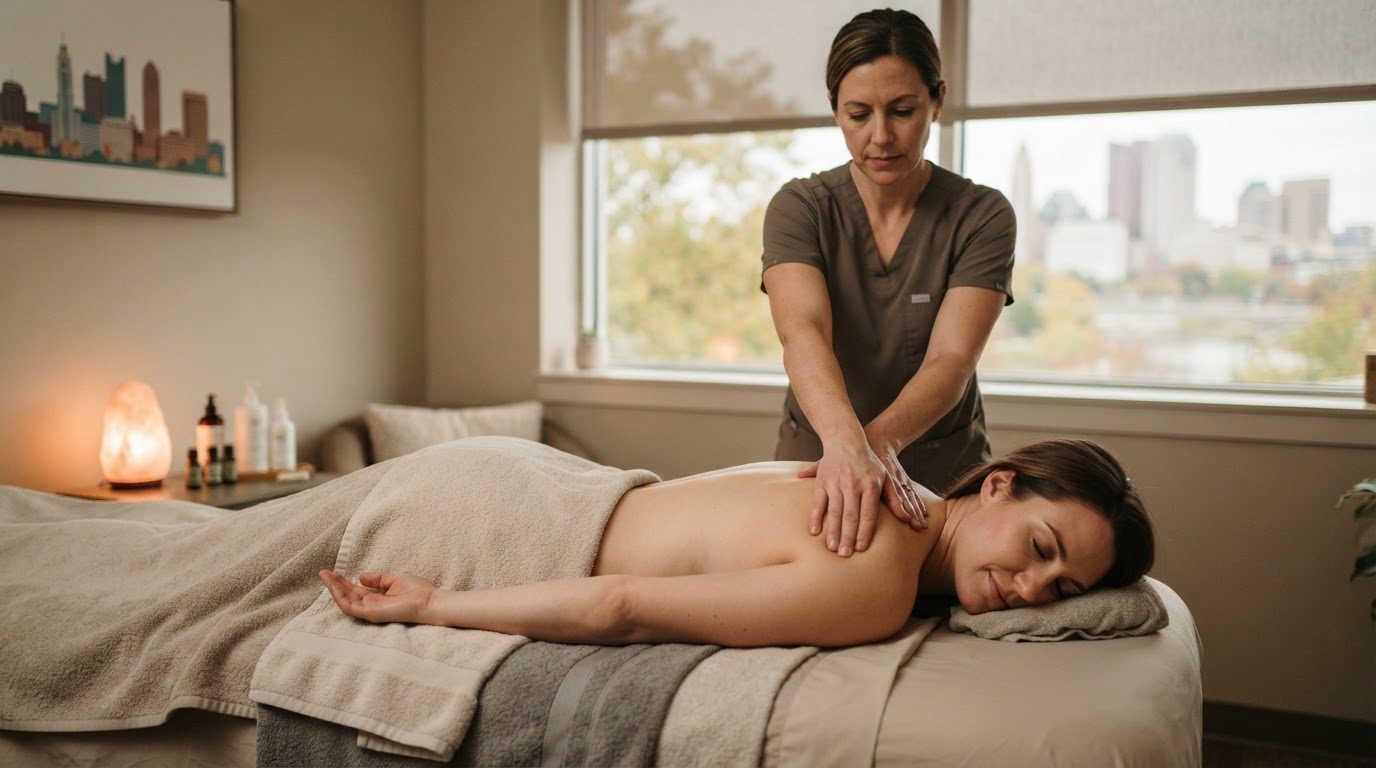
A Columbus massage can mean very different things depending on whether you want quiet relaxation after a demanding week, relief from training-related soreness, or focused work on persistent muscle tension. The most useful first step is identifying the outcome you want rather than choosing a technique by name alone.
People searching for Columbus massage will find options ranging from walk-in studios to appointment-based spas and clinical integrative practices. Location, treatment style, therapist training, session length, and availability all affect the experience, so comparing those factors is more useful than relying on a generic “full-body massage” label.
For a convenient starting point, massage-escape offers walk-in service about five minutes from downtown on East Main Street, with coverage extending to Columbus, Bexley, Pickerington, and Reynoldsburg. Still, every client should confirm current hours, pricing, availability, and suitability for a particular health concern before booking.
Start With the Massage That Matches Your Goal
A general wellness session usually emphasizes broad relaxation, circulation, comfortable pressure, and a calm pace. A focused therapeutic session may spend more time on the neck, shoulders, hips, back, calves, or specific trigger points. Neither approach is universally better; the right choice depends on what your body needs that day.
Consider four variables:
- Pressure: Light-to-moderate pressure is often appropriate for relaxation, while persistent tightness may respond to firmer work. More pressure is not automatically more effective.
- Pace: Slow, flowing strokes tend to support relaxation. Focused compression, friction, stretching, and positional work are more targeted.
- Treatment area: A full-body session distributes time across multiple regions. A localized appointment can devote more minutes to a troublesome back, shoulder, or lower leg.
- Duration: A 30-minute appointment may address one or two areas. A 60-minute session allows broader coverage, while 90 minutes can accommodate both full-body work and detailed focus.
If your goal is mobility, describe the movement that feels restricted. If it is recovery, explain your activity level, training schedule, and soreness pattern. Clear information helps the therapist develop a practical treatment plan rather than follow a fixed routine.
Massage Styles Available Around Columbus
For Muscle Tension and Recovery
Deep tissue massage uses sustained pressure and slower strokes to address deeper layers of muscle and connective tissue. It may be appropriate for chronic tightness or trigger points, but it should not produce sharp, electric, or intolerable pain.
Sports massage is designed for active clients, including people managing training fatigue, movement-related soreness, or recovery between events. The session may combine compression, stretching, range-of-motion work, and localized treatment rather than resembling a conventional relaxation massage.
Backwalk, or Ashiatsu, involves a trained therapist using supported foot pressure. Because the load can be substantial, clients should discuss pressure tolerance, previous injuries, and contraindications before treatment.
Acupressure applies sustained or rhythmic pressure to selected points. It may be paired with broader massage techniques and is often chosen by clients who prefer focused, firm contact.
For Relaxation and Gentle Care
Swedish massage generally uses flowing effleurage, kneading, and lighter-to-moderate pressure. It is a common choice for stress relief, first-time clients, and people seeking a calm, whole-body session.
Hot stone massage adds heated stones to massage techniques. Thermal warmth can make muscles feel easier to work with and may enhance relaxation. Clients should report heat sensitivity, reduced sensation, diabetes, or circulation concerns before treatment.
Prenatal massage should be provided by a therapist trained to work with pregnancy-related positioning and comfort needs. Tell the provider how far along you are, whether your clinician has identified restrictions, and which positions feel comfortable. A pillow-supported side-lying setup may be used instead of prolonged face-down positioning.
For Feet, Mobility, and Whole-Body Balance
Foot massage and reflexology can be useful for tired feet, standing-related fatigue, and lower-leg tension. Reflexology follows a point-based system on the feet; it should be understood as a relaxation and wellness service, not a substitute for treating an organ or diagnosing disease.
Shiatsu-inspired pressure work may combine rhythmic compression with assisted stretching and joint movement. Stretching-oriented care can suit clients who feel stiff from desk work, commuting, or repetitive activity, provided movements remain controlled and comfortable.
A provider offering several techniques can adapt treatment to changing priorities. For example, a client may want Swedish work for most of a session but focused deep tissue work on the upper back, or foot treatment after a long day of standing.
How to Choose a Columbus Massage Appointment
Columbus clients have several practical formats to compare. Walk-in service can be useful when your schedule changes or you need same-day availability. A scheduled spa appointment may offer a more planned experience, specific therapist selection, couples booking, or add-on services.
Before committing, check:
- Location and access: East Main Street, downtown routes, parking, and travel time matter when you are sore after treatment or arriving during peak traffic.
- Service area: Some providers serve clients from nearby Bexley, Pickerington, and Reynoldsburg, which may expand scheduling options.
- Hours and booking: Confirm whether walk-ins are accepted, whether online booking reflects real-time availability, and how cancellations are handled.
- Treatment descriptions: Look for plain-language explanations of pressure, duration, positioning, and intended use.
- Pricing: In Columbus, a 60-minute massage commonly falls roughly in the $70–$150 range, depending on provider type, technique, membership pricing, and spa amenities. Deep tissue, hot stone, prenatal, and specialty sessions may cost more.
- Professional standards: The facility should be clean, private, and clear about draping, boundaries, payment, gratuity, and communication.
Call ahead if you need a prenatal appointment, couples session, particular therapist, specialized technique, or same-day time. A phone conversation can also clarify whether a service is appropriate for an injury or medical condition.
What to Expect Before, During, and After a Session
A responsible intake usually covers current soreness, injuries, surgeries, medications, pregnancy, allergies, skin conditions, health diagnoses, and treatment goals. Explain what makes symptoms better or worse, including sitting, lifting, running, or sleeping position.
You control your comfort level. You may undress only as much as you choose, and professional draping should keep areas not being treated covered. Therapists should explain positioning and work around clothing when appropriate. You can request less pressure, more pressure, a different position, another body area, or an end to the technique at any time.
Massage may support relaxation, perceived pain relief, mobility, and temporary reduction in muscle tension. It does not replace medical diagnosis, imaging, physical therapy, or prescribed treatment. Columbus weather can also influence comfort: cold winter temperatures may increase the sensation of stiffness, while summer activity and humidity can contribute to fatigue and dehydration. Neither condition should be treated as a diagnosis.
Afterward, drink water according to your normal needs, take a gentle walk or perform easy mobility work, and avoid immediately testing a heavily treated area with strenuous exercise. Mild tenderness can occur, particularly after unfamiliar firm work, but severe or worsening symptoms deserve medical attention.
Columbus Massage Questions People Commonly Ask
How Much Should You Tip for a Massage?
Gratuity is customary in many U.S. wellness settings but remains optional. A common benchmark is approximately 15%–20% of the service price when the experience meets expectations, although clients can choose another amount or no tip. Check whether a gratuity, automatic service charge, or facility fee is already included, particularly at spas or when purchasing a package.
Do You Remove All Your Clothes?
No. You undress only to your comfort level and remain properly draped throughout the session. Many clients keep underwear on, and therapists can work around clothing for areas such as the feet, back, or shoulders. Ask how you will be positioned before changing, and speak up if draping or temperature feels uncomfortable.
Is a Deep Tissue Massage Supposed to Hurt?
Therapeutic pressure can feel intense, productive, or mildly tender, but sharp, burning, numb, or overwhelming pain is not an objective. Tell the therapist immediately if the pressure is too strong. They can reduce intensity, change the angle, use a different technique, or move to another area. Waiting until the appointment ends makes adjustment less effective.
When Should You Choose a Medical Provider Instead?
Seek medical guidance before massage for unexplained severe pain, a recent acute injury, suspected fracture, significant swelling, fever, open wounds, progressive weakness, numbness, tingling, or other neurological symptoms. A clinician should also evaluate chest pain, sudden shortness of breath, or rapidly changing symptoms.
Clients who are pregnant or managing cancer, blood-clotting disorders, osteoporosis, uncontrolled hypertension, complex neurological conditions, or recent surgery should ask an appropriate medical professional whether massage is advisable and what restrictions apply. Massage can be a valuable wellness service, but safe care begins with choosing the right level of care for the problem.