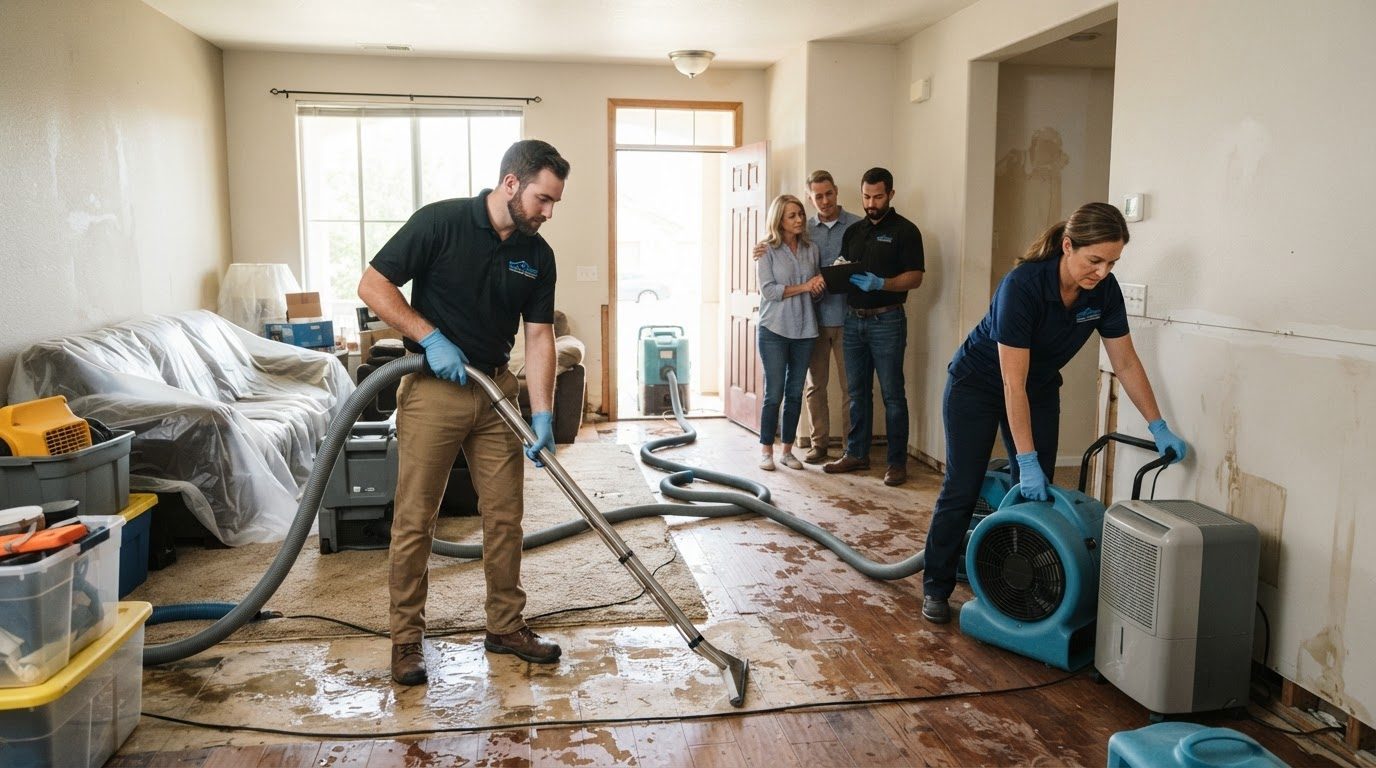
A burst pipe, failed water heater, or summer storm can turn a dry Centennial home into a hazardous worksite within minutes. The priority is not simply removing visible water; it is protecting occupants, stopping the source, and preventing moisture from spreading into building materials.
Emergency Water Damage Restoration generally means the coordinated inspection, extraction, drying, cleaning, and repair preparation required after water enters a structure. In Centennial, freeze-thaw cycles, hailstorms, heavy rain, and aging plumbing can create very different loss conditions, so the response must match the source and contamination level.
While help is on the way, Restoration Logistics Centennial can be part of the response plan, but property owners still need to make safe first decisions. Never enter uncertain electrical conditions or contaminated standing water simply to save belongings.
Take Immediate Safety and Damage-Control Steps
Start with life safety. Keep children and pets away from standing water, sagging ceilings, damaged flooring, and areas that may contain sewage or chemical contamination.
If the leak is from a fixture, appliance, or supply line, close the nearest shutoff valve. If necessary, turn off the home’s main water supply—but only if it can be reached safely. A plumber may be needed for a failed pipe, water heater, or valve.
Electrical hazards require special caution:
- Do not touch outlets, switches, appliances, or extension cords in or near water.
- Do not walk through flooded rooms to reach an electrical panel.
- If the panel is dry and accessible without crossing water, a qualified person may shut off power to affected circuits.
- Contact a licensed electrician when wiring, the panel, outlets, or hardwired equipment may have been exposed.
Photograph and video the damage before moving contents, provided doing so does not delay emergency action. Record the source, affected rooms, damaged belongings, ceiling stains, flooring, and visible water lines. You can safely move lightweight items from dry areas, place foil or plastic under furniture legs, and remove clean, loose items from the path of water. Avoid operating household vacuums, cutting drywall, lifting heavy saturated furniture, or applying chemicals to suspected sewage.
Identify the Type and Extent of Water Damage
Restoration professionals commonly classify water by contamination:
- Clean water: Supply-line leaks or some rainwater intrusion, assuming the source is sanitary.
- Gray water: Water containing chemicals, food residue, or biological contaminants, such as an appliance discharge or overflowed shower drain.
- Black water: Sewage, rising floodwater, or heavily contaminated water requiring strict protective equipment, containment, and specialized sanitation.
The cause affects both safety and insurance handling. Common emergencies include burst or frozen pipes, appliance and water-heater failures, overflowing toilets, roof breaches, storm intrusion, basement or crawl-space flooding, and sewer backups.
Water rarely stays where it first appears. It can wick behind drywall, travel beneath flooring, saturate carpet padding and insulation, enter cabinet bases, and move through wall cavities or ceiling assemblies. Check adjacent rooms, closets, cabinets, ceilings below the incident, and lower levels. A small ceiling stain may represent substantial moisture above it.
Standing water, sewage exposure, or moisture that has remained for an extended period calls for professional containment and sanitation. Technicians may use negative-air controls, protective barriers, HEPA filtration, and antimicrobial products selected for the material and contamination category. Do not mix household cleaners, especially products containing bleach and ammonia.
How Emergency Water Damage Restoration Works
Professional restoration is a controlled process, not just mopping. A typical workflow includes:
- Inspection and moisture assessment: Technicians identify the source, water category, affected materials, and likely migration paths. Moisture meters measure content in drywall, wood, and subflooring; thermal imaging can help locate cooler, damp areas that are not visibly wet.
- Extraction and contents handling: Portable or truck-mounted extractors, pumps, and weighted extraction tools remove standing water. Saturated contents may be elevated, cleaned, moved, or documented for pack-out.
- Controlled demolition: Unsalvageable drywall, insulation, carpet pad, flooring, or swollen composite materials may be removed. Cuts should be limited and deliberate to preserve sound materials and reduce reconstruction costs.
- Cleaning and disinfection: Surfaces and contents are cleaned, deodorized, and treated according to contamination conditions. Sewage losses require more stringent procedures than a clean supply-line leak.
- Structural drying: Air movers increase evaporation while dehumidifiers remove moisture from the air. Equipment placement depends on room size, material type, humidity, and airflow—not simply on how much water is visible.
- Monitoring and documentation: Technicians take repeated readings, maintain drying logs, adjust equipment, and document affected materials. Drying is complete when readings approach appropriate unaffected-material or industry targets.
- Final inspection and repair preparation: Equipment is removed after verification. The property can then proceed to reconstruction, such as drywall replacement, flooring installation, painting, or cabinet repair.
Mitigation stabilizes the property and limits further damage. Remediation addresses contamination or hazardous conditions, such as sewage or microbial growth. Reconstruction replaces damaged building components. One company may coordinate all three, but they remain distinct scopes of work.
A dry-looking surface does not prove that the structure is dry. Moisture trapped behind walls, under flooring, or inside insulation can support odor, swelling, corrosion, and microbial growth. Mold risk rises when materials remain damp, although the exact timeline varies with temperature, humidity, and material type.
Protect Your Home, Contents, and Insurance Claim
Notify your insurer promptly and ask about emergency mitigation requirements, deductibles, exclusions, and preferred documentation. Coverage is policy-specific. Sudden, accidental plumbing failures are often treated differently from gradual seepage, neglected maintenance, groundwater, or floodwater. Sewer-backup coverage may require a separate endorsement, while exterior flooding may fall under a flood policy rather than standard homeowners insurance.
Maintain a claim file containing:
- Date, time, suspected cause, and mitigation actions.
- Photographs and video before and during cleanup.
- Affected-material inventories and contents photographs.
- Moisture readings, equipment lists, and drying logs.
- Written estimates, invoices, plumber reports, and repair recommendations.
Do not make permanent repairs, remove extensive materials, or discard heavily damaged contents before documentation and insurer guidance when doing so could affect the claim. Emergency measures to stop active damage are different from rebuilding decisions.
Contents may be cleaned in place or moved through a pack-out. A contents inventory should distinguish salvageable, questionable, and unsalvageable items. Ask how valuables, electronics, documents, and porous belongings will be handled, stored, and returned.
For planning purposes, small mitigation jobs may cost roughly $1,000–$3,000, while moderate losses commonly reach $3,000–$8,000 or more. Extensive flooding, sewage contamination, structural demolition, or reconstruction can exceed $10,000. Actual costs depend on water volume, labor, access, drying duration, materials, and coverage—not a standard flat rate.
Choosing Help for a 24/7 Water Emergency
A credible emergency restoration provider should offer:
- Genuine after-hours response, including weekends and holidays.
- Trained technicians and, where applicable, IICRC certification.
- Commercial extraction, air movers, dehumidifiers, moisture meters, and monitoring procedures.
- Experience with clean, gray, and black water.
- Written scopes, estimates, photographs, and drying records.
- Coordination with plumbers, electricians, contractors, and insurance representatives.
- A clear transition from mitigation to reconstruction without pressuring you into unnecessary work.
Ask who will perform the work, whether subcontractors are involved, how often moisture will be measured, what equipment and services are included, and how change orders are approved. Confirm whether emergency service, demolition, contents handling, antimicrobial treatment, and rebuild work are separate charges.
You generally can choose your restoration provider rather than automatically accepting an insurer’s recommendation. Speed matters, but so do documentation, technical competence, and transparent communication.
Emergency Water Damage Restoration Questions
How quickly should water removal begin?
Immediately when it is safe. Prompt extraction reduces absorption, swelling, odor, secondary damage, and microbial-growth risk. Do not sacrifice personal safety to start cleanup.
How long does the drying process take?
Many uncomplicated losses require approximately three to five days of active drying, but there is no universal schedule. Water volume, contamination, weather, ventilation, material thickness, hidden cavities, and indoor humidity all matter. Equipment should be removed based on moisture readings, not appearance or a calendar.
Can wet carpet, drywall, flooring, or furniture be saved?
Sometimes. Salvageability depends on the material, contamination category, exposure time, swelling, delamination, structural integrity, and whether thorough drying is possible. Clean-water carpet may be recoverable; sewage-contaminated porous materials often are not. Hardwood, engineered flooring, drywall, and furniture need individual assessment.
Does homeowners insurance cover water damage restoration?
Often, sudden accidental losses may be covered, subject to the policy, deductible, limits, exclusions, and endorsements. Gradual leaks, maintenance problems, groundwater, and floodwater may be excluded or handled under different coverage. Ask your carrier before assuming a loss is covered.
Should mold be tested after a water emergency?
Routine testing is not always necessary after a promptly dried, clean-water loss. Professional assessment is appropriate after sewage exposure, prolonged dampness, recurring moisture, visible microbial growth, or unexplained odors. Testing should support a specific decision; it should not delay extraction and drying.