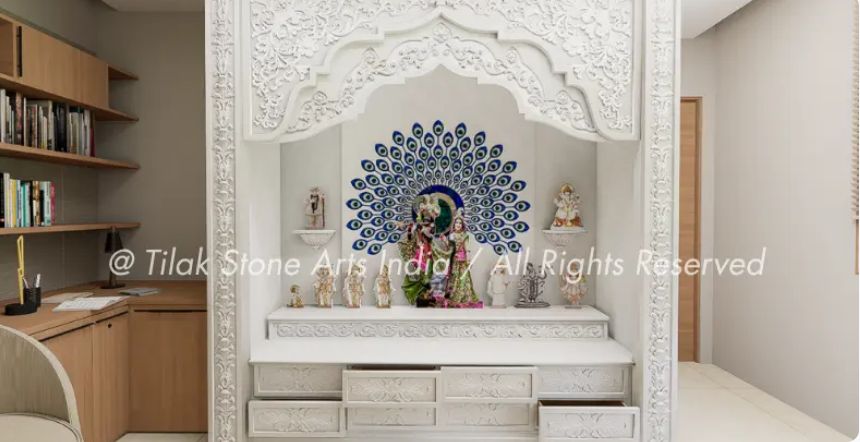
There is a strange pattern with pooja rooms in Indian homes. Families spend months choosing the right sofa fabric or kitchen countertop, but when it comes to the prayer space, decisions happen in a rush. A corner gets assigned, a mandir gets ordered, and the rest fills itself in over time. The result is a room that works but never quite feels right. That gap between functional and meaningful is where most pooja rooms get stuck.
What separates a forgettable prayer corner from a truly considered pooja room interior is rarely one big decision. It is a collection of smaller ones. The wall finish behind the mandir, the colour temperature of the lighting, the height of the ceiling relative to the temple, and the flooring pattern around the prayer area. These details do not show up on a basic floor plan. They only become visible once the room is built, and by then, fixing them costs twice as much. Perhaps that is why so many pooja rooms feel like afterthoughts even in otherwise well-designed homes.
The temple itself carries significant weight in this equation. A white marble temple brings a natural sense of calm and purity to a prayer space. But placing it without considering the surroundings is a common mistake. A carved marble mandir against busy wallpaper or dark wood panelling creates visual conflict instead of harmony. The temple needs breathing room and a backdrop that recedes rather than competes. Vietnam White Marble works well here because its tone stays consistent, letting the carving details do the talking.
Why Wall Treatments Deserve More Attention
The wall directly behind the mandir is probably the most underestimated surface in a pooja room. Designers who work with marble temples often recommend full-height marble cladding on this wall. It ties the temple to the room rather than making the mandir feel like furniture dropped into an empty space. Swiss White Marble or White Vietnam Marble panels behind a carved temple give the wall a gallery-like quality.
Lighting That Shapes the Mood
Room lighting gets decided last and regretted first. A single ceiling light washing the room in white flattens the space and removes depth. The mandir needs its own focused light source, something warm and directional that draws your gaze toward the deity.
Flooring Choices That Ground the Room
In a pooja room, the floor sets the tone for everything above it. A busy floor pattern distracts from the mandir. A plain one can make the room feel unfinished. The balance sits somewhere in between. A clean marble floor with a subtle border pattern defines the prayer area without competing with the temple.
The Ceiling Often Gets Forgotten
In most pooja rooms, the ceiling is flat, white, and ignored. That is a missed opportunity. A recessed ceiling panel with concealed perimeter lighting adds enclosure and makes the room feel intimate. Carved marble domes or wooden treatments bring character without overwhelming the space.
Small Additions That Complete the Space
Built-in niches for diyas and incense holders keep the prayer area tidy. A small marble shelf at the right height keeps you from having to place items on the mandir platform. Even the threshold of the pooja room door, finished in marble or brass, signals a transition from the everyday into the sacred.
These are the details that do not appear in a design brief but make all the difference once the room is in use. A pooja room interior built on thoughtful decisions at every level feels different the moment you step in. That feeling is what turns a room into a space worth returning to every day.